How Outcome-Driven Approaches Redefine DevOps and Platform Engineering Success
In the last decade, organizations chased the DevOps dream, drowning themselves in complexity and cognitive overload. Outcome-Driven Approaches Redefine DevOps and Platform Engineering Success
The emergence of DevOps revolutionized how teams approach software delivery.
In the last decade, organizations chased the DevOps dream, drowning themselves in complexity and cognitive overload. Then came platform engineering, which further transformed this space. Platform engineering promises self-service options for developers and abstracted infrastructure. Yet, it brings its own challenges around balancing customizability and control while introducing potential bottlenecks due to the centralization of resources.
In this exploration, we'll go beyond the methodology comparisons to examine what actually drives engineering success. We'll explore the promises versus realities of DevOps at scale and how platform engineering emerged as both a complement and a competitor. Ultimately, we will reveal why an outcome-based approach is the proper way forward. This approach of focusing on outcomes and not tools has become popular lately. For example, check out why I stopped loving DevOps and started worrying. In the end, it’s not about choosing sides but rather focusing on what delivers measurable value to your organization and customers. Let's dive in.
The Promise and Reality of DevOps in Enterprise Contexts
DevOps methodologies promise to increase efficiency and help software teams deliver business value faster. At its core, DevOps combines development and operations functions into cooperative workstreams, breaking down traditional silos that hindered innovation and slowed down software delivery. The promise is compelling - improved deployment frequency, faster time-to-market, lower failure rates for new releases, and shorter time between fixes.
However, the reality in enterprise environments has proven more complex, leading many organizations to a paradox: the methodology designed to simplify delivery often creates new layers of complexity. The automation and new fancy tooling that was supposed to free developer time have increased complexity and created extra maintenance work. The cross-functional collaboration that looked amazing in theory struggles against decades of enterprise silos and processes.
The disconnect is particularly visible in larger organizations where geographically distributed teams and multiple layers of management require significantly more coordination than in the startup environments where DevOps first flourished. What works great with a few developers doesn’t directly translate to success at the enterprise scale. These challenges have led many organizations to question whether their DevOps implementations deliver the promised outcomes or contribute to new forms of operational complexity.
The Original Vision of DevOps: Speed, Collaboration, and Reliability
We aren’t saying that DevOps has failed—far from it. When properly implemented, it delivers remarkable results. The question isn't whether DevOps works but how we adapt its principles to enterprise environments' messy, complex reality without drowning in implementation details.
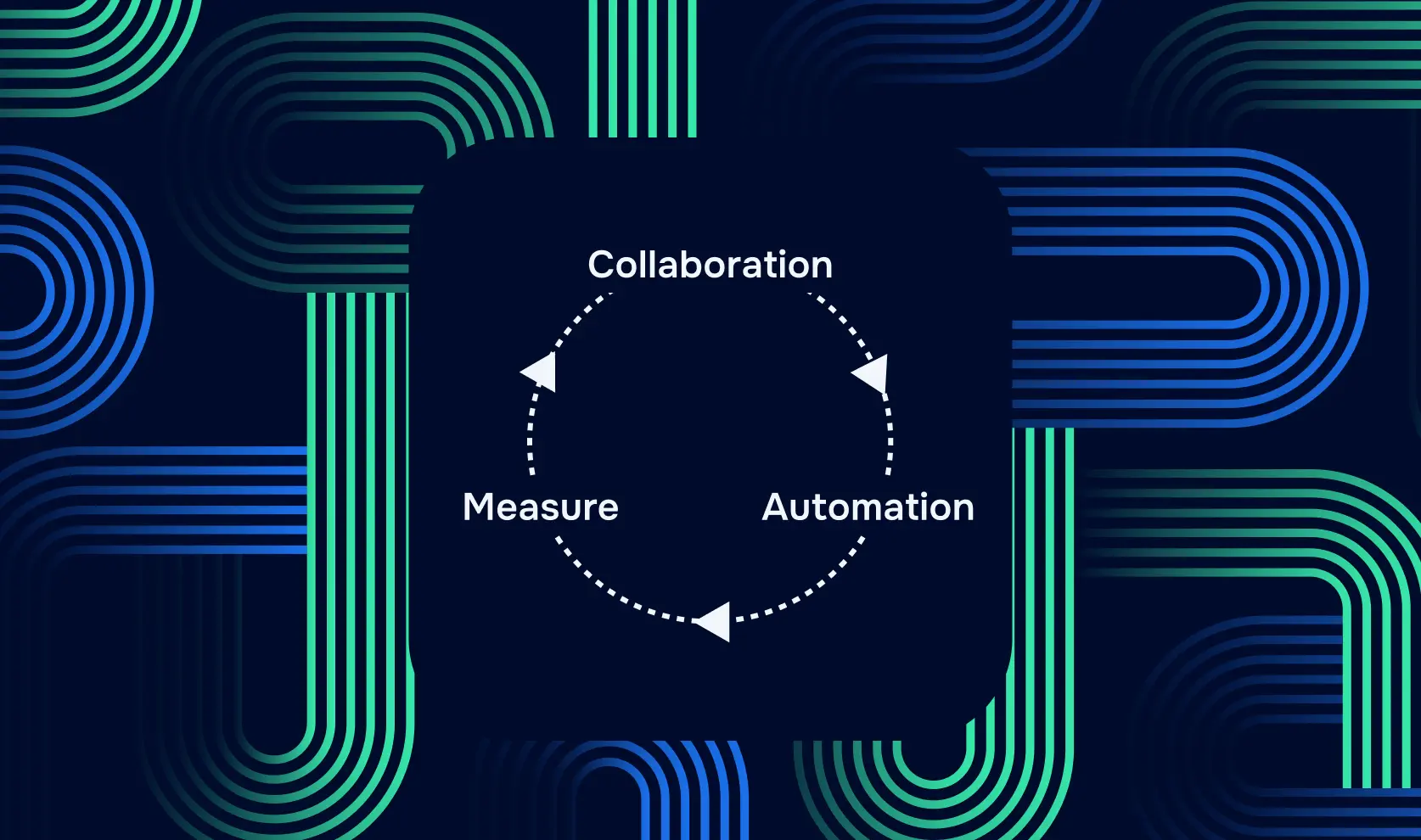
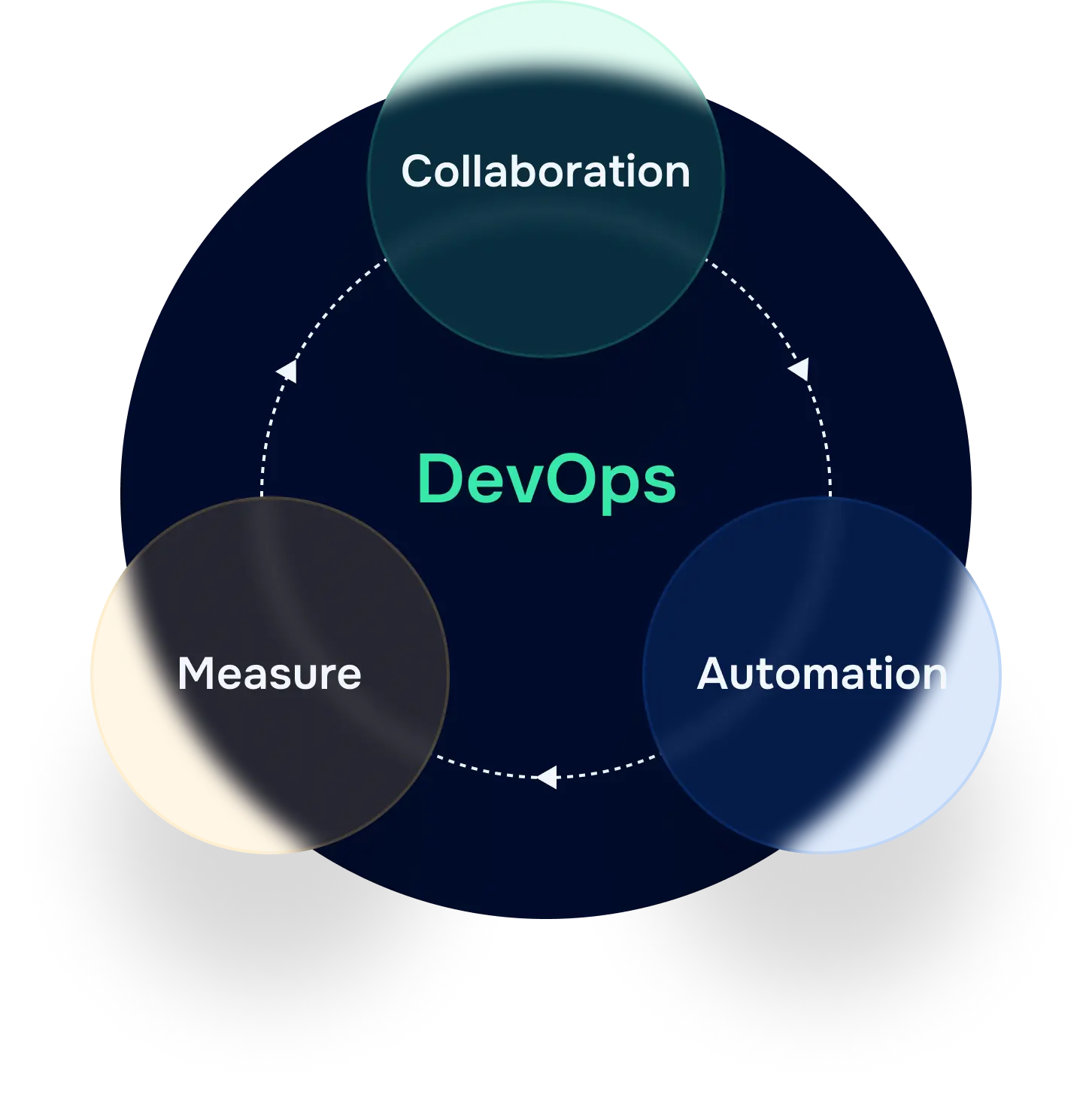
The original DevOps vision was focused on three main principles. The first is enhanced collaboration between everyone participating in any part of the software development and delivery lifecycle. This meant shared accountability, breaking down knowledge silos, and creating feedback loops that prevented problems rather than just responding to them. Second, instead of relying on manual processes and silos, invest in automation of repetitive tasks from infrastructure provisioning to testing to deployment. Lastly, great emphasis is placed on measuring what matters, metrics that capture value progression and delivery.
When these elements came together effectively, organizations achieved extraordinary results: the ability to confidently deploy dozens of times daily, recover from failures in minutes rather than days, and experiment and learn rapidly. The main problems appeared as DevOps gained mainstream adoption. Then, we saw typical hype effects: the methodology often overshadowed the mindset, and the how eclipsed the why. And in that subtle shift, something essential was lost.
Platform Engineering: Revolution or Evolution?
After DevOps became mainstream, fatigue set in at many organizations. Engineers drowned in complex manifests, distributed systems across scattered environments, and multiple toolchain configurations. Their cognitive load had drastically increased, and they spent more time on operational concerns and tooling maintenance than building features.
Platform engineering represents a more nuanced approach that acknowledges the specialized knowledge required to manage modern, cloud-native infrastructure while empowering developers to build and run their applications independently. Teams started carving out dedicated engineers to build internal developer platforms (IDPs) that abstracted away complexity and made it easier to operate infrastructure, start new environments, and access observability data.
Is this a revolution against DevOps principles or their natural evolution? The answer depends on who you ask. Platform engineering skeptics worry about creating new centralized bottlenecks, undoing years of cross-functional progress. Others advocate that platform engineering isn’t replacing the DevOps culture but providing the tools to make it sustainable at scale.
The distinction becomes more apparent when you examine what each approach optimizes for: DevOps optimizes for breaking down silos through shared responsibilities and cultural change. Platform engineering optimizes developer experience through abstraction and self-service. These aren't mutually exclusive; they're complementary when implemented thoughtfully. The strongest sign that platform engineering represents evolution rather than revolution is how seamlessly DevOps practitioners have embraced it lately. The conversation isn't about abandoning DevOps principles but implementing them more effectively.
The Outcome-Approach: Beyond the DevOps vs. Platform Debate
Now that we have compared the two approaches and discussed their backgrounds, it’s clear that the most successful organizations don't frame this as DevOps versus platform engineering. Instead, they ask: "How can we combine these approaches to deliver better outcomes?" They recognize that platform engineering provides the patterns and foundation that make DevOps practices sustainable at scale.
This is consistent across industries–companies focusing on outcomes and customer-related metrics outperform their peers. But what exactly is an outcome-driven approach? It's about focusing on the behavioral changes you want to create rather than the features you plan to ship. Outcome-driven teams ask: "What customer behaviors will drive business success?" This approach is particularly powerful because it recognizes that neither methodology is inherently superior—they're simply different tools that might help achieve desired outcomes in different contexts.
There are a lot of examples of platform teams that built impressive internal developer platforms, including Kubernetes abstractions, self-service infrastructure, and advanced CI/CD capabilities. Yet, in many of these cases, developers' adoption of the platform remained low because it wasn’t focused on the things that mattered to them. When they pivoted to an outcome-driven approach, they discovered developers cared less about technical sophistication and more about simplification and eliminating specific pain points, such as long deployment times.
The outcome approach requires a fundamental mindset shift that many organizations struggle with. It means embracing uncertainty and being willing to change direction based on evidence rather than opinions. It requires cross-functional collaboration that breaks down not just dev and ops silos but product, business, and customer success barriers as well. Most critically, it demands that teams measure what matters. We increasingly see software professionals rank customer satisfaction as a top-tier success metric, yet most admit it's difficult to measure it for the features they develop. This measurement gap represents both the challenge and opportunity of outcome-driven development.
Organizations that successfully make this transition typically follow a similar pattern: First, they establish clear, measurable outcomes tied directly to business goals. Then, they implement tight feedback loops that provide rapid insights into whether their changes drive the desired outcomes. They embrace experimentation, making small changes, measuring impact, and doubling down on what works while abandoning what doesn't. Finally, they create a culture of safety that allows teams to pivot when the evidence suggests their initial approach isn't working.
The beauty of this approach is that it doesn't require abandoning your existing investments in DevOps or platform engineering. Instead, it provides the strategic framework that makes these tactical approaches more effective. DevOps practices and platform tooling become means to an end rather than ends in themselves.
Key Points
While many are obsessed with methodologies and tools, the organizations pulling ahead will be those that maintain a focus on outcomes. They'll leverage DevOps culture and platform engineering capabilities not as competing philosophies but as complementary approaches in service of what matters—creating value for customers and the business.













voestalpine.webp)