GitHub-Driven Terraform Workflows with StackGuardian (Full Guide + Demo)
Validate, review, and deploy infrastructure changes without ever leaving your pull request
Validate, review, and deploy infrastructure changes without ever leaving your pull request
If your team lives in GitHub, your infrastructure workflows should too.
In this video, we walk through how StackGuardian integrates directly with GitHub to automate Terraform workflows — so you can validate, review, and deploy infrastructure changes without ever leaving your pull request.
We’ll cover how pull requests trigger Terraform plans, how policies and cost controls are enforced automatically, and how merges lead to safe, automated applies.
Managing infrastructure changes across environments often leads to friction:
StackGuardian solves this by turning GitHub into the control plane for infrastructure changes.
At a high level, the workflow follows a familiar GitOps model:
But StackGuardian enhances each step with deeper visibility and governance.
Start by introducing infrastructure changes in a feature branch.
Once you open a pull request to merge into your main branch:
This ensures every change is validated before it reaches production.
As soon as the PR is opened, StackGuardian runs a Terraform plan and posts the results back into the GitHub conversation.
This includes:
Example: In the demo, the plan shows a new resource group being added with no cost impact.
Beyond just the plan, StackGuardian evaluates:
This means reviewers can answer critical questions instantly:
All without switching tools.
Once the plan, policies, and cost checks pass, the team can confidently review and merge the PR.
You can:
After merging into the main branch:
This creates a fully automated CI/CD pipeline for infrastructure.
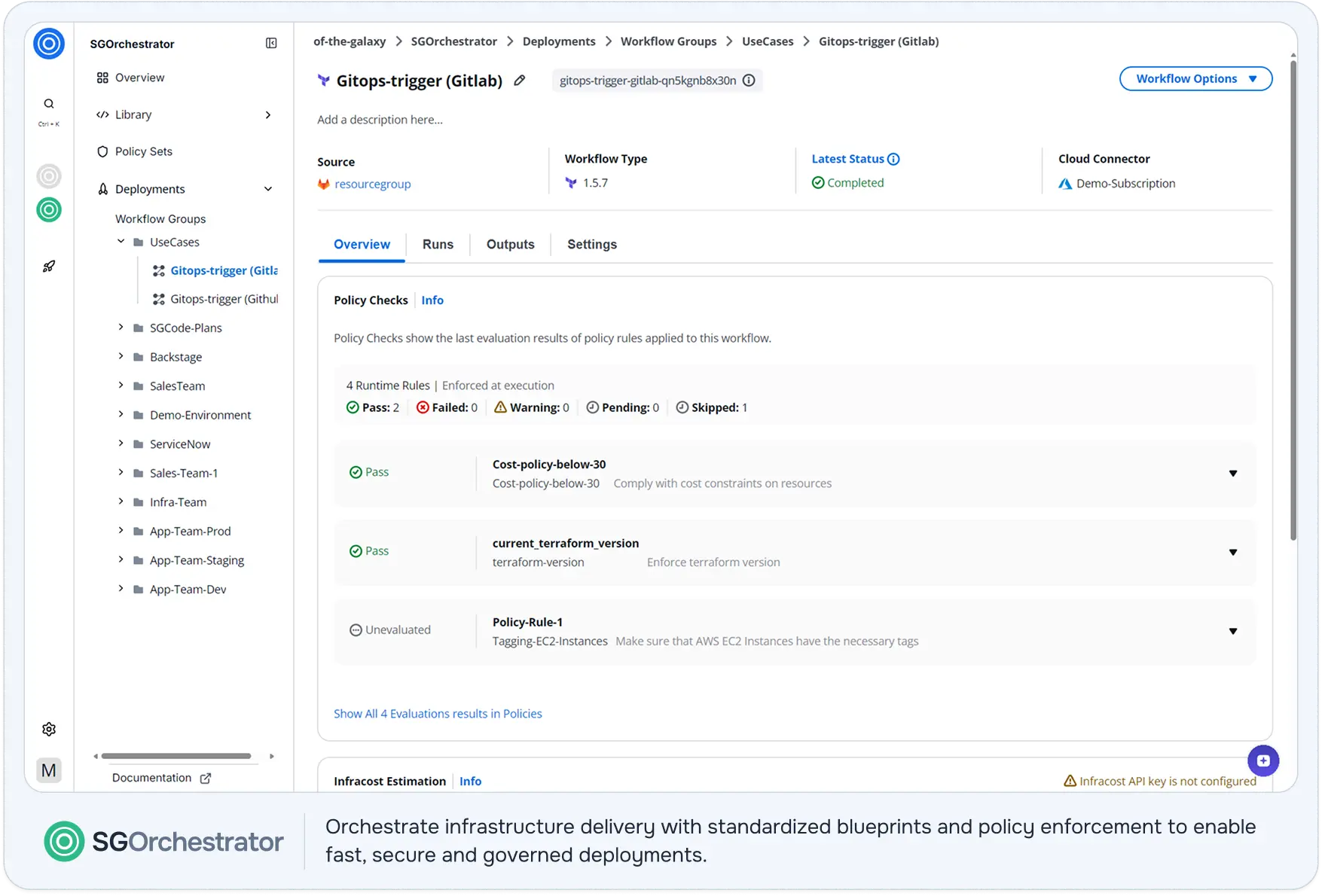
The entire workflow is powered by simple trigger settings inside StackGuardian.
Two key configurations enable this flow:
Once configured, this setup works across all environments:
Each environment can follow the same consistent workflow.
This integration delivers real operational benefits:
In short, it turns infrastructure delivery into a safe, repeatable, and developer-friendly process.
If your team already uses GitHub for application development, extending that same workflow to infrastructure is a natural next step.
StackGuardian makes that transition seamless — adding automation, compliance, and visibility without introducing complexity.
Watch the demo above to see it in action, and start building safer infrastructure workflows today.
🔗 Learn more about StackGuardian: https://stackguardian.io
🔗 Docs: https://docs.stackguardian.io








voestalpine.webp)