Error - Could not copy link
Page link copied!
Blog

Building Golden Paths: Standardizing Cloud Deployments

Golden paths provide an easy, quick, safe, and replicable way to accomplish everyday tasks that align with organizational standards. Here's why you should use them


Ioannis Moustakis
October 22, 2025
~0 min read

Introduction

If you have been working with cloud infrastructure, you are probably familiar with this scenario: a developer needs to deploy a new application service. They copy infrastructure code from a previous project to replicate the necessary components. They modify configurations they don't fully understand. A few hours later, the deployment fails.

As we have briefly described in the previous example, infrastructure chaos is typical in organizations that have grown rapidly and can lead to inconsistent deployments and manual processes that create bottlenecks, configuration drift, and security incidents.

What if there were a clear, supported path for every infrastructure deployment? That’s the promise of golden paths; a way to transform chaotic infrastructure management into standardized, efficient workflows.

The Infrastructure Standardization Challenge

We often see in practice various teams in the same organization using different tools for similar tasks, effectively working in silos. Even more, infrastructure knowledge is scattered across individuals, with other teams adopting different standards without a consistent organizational approach to security, compliance, and governance. These governance gaps lead in turn to security vulnerabilities and visibility issues on the infrastructure level. In these cases, teams complain about slow deployment cycles due to manual approvals and a lack of autonomy.

What Are Golden Paths and Why Do You Need Them?

Golden Paths to the rescue! Golden paths are opinionated, well-documented approaches to building and deploying infrastructure. They provide an easy, quick, safe, and replicable way to accomplish everyday tasks that align with organizational standards. 

Instead of relying on individuals and teams to figure out how they can build and run their software and infrastructure components, golden paths offer ready-made workflows and create consistency by reducing complexity. Platform teams are responsible for defining these golden paths, organizational standards, and templates based on developers’ common pain points and needs. Users and developers then consume these golden paths, usually in a self-service fashion, speeding up software and infrastructure development and deployment lifecycles.
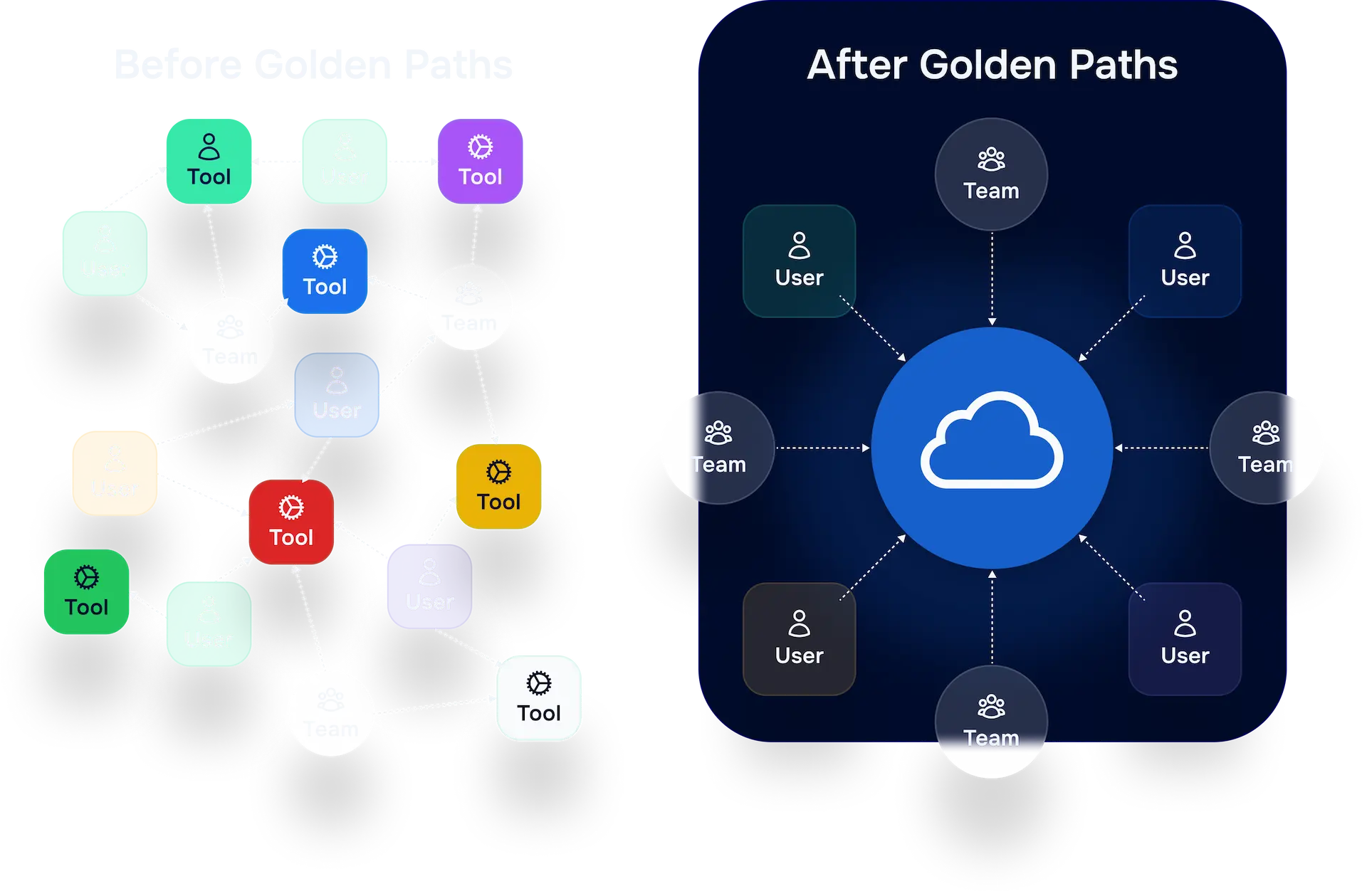
Standardization of processes and tools with golden paths

In cloud infrastructure, a golden path might include a standard way to deploy applications, configure CI/CD components, or manage Kubernetes clusters. In software development, it can consist of preferred languages, pre-configurable code repositories, frameworks, or security best practices.

The golden paths of an organization won’t be able to address all of the users' use cases, and that’s fine. Platform teams create golden paths for the most common and impactful scenarios, and they generally attempt to address around 80% of the organization’s flows. Developers should be able to bypass them and choose an alternative flow if their needs cannot be met with a golden path. Of course, bypassing golden paths comes with its own trade-offs, but it is a choice that users and platform teams should live with occasionally.

Organizations that work hard to understand their current blockers, pain points, and bottlenecks, and invest time and effort in improving their developer experience with concrete and impactful golden paths, are able to overperform their peers. They manage to reduce deployment times, decrease infrastructure-related incidents, improve developer onboarding speed, and, in general, lower the operational overhead and cognitive load of their users.

It might not be clear immediately, but this standardization in several layers provides competitive advantages with faster time to market for new features, consistent security posture across environments, improved compliance and audit readiness, and increased developer satisfaction. 

Implementing Golden Paths

Implementing the appropriate golden paths for your organization is a long process. Don’t try to address everything from the start. Assess your current infrastructure standardization maturity and start with a pilot golden path for your most frequent use case. Long-term, plan to expand golden paths to cover ~80% of use cases, integrate them with broader platform engineering initiatives, and establish a center of excellence for infrastructure best practices. Let’s take a look in more detail at how to approach the implementation below.

Phase 1: Understanding Your Current State

The first step is to understand your current situation by documenting current workflows, scanning existing resources across all environments, and gathering a comprehensive infrastructure inventory and dependency mapping. A crucial part of the process is interviewing developers about what they actually need to work more efficiently. You will be building this for your users, so make sure you are investing in the right things. Even more, task your platform team to identify configuration patterns and common inconsistencies,  assess security and compliance gaps, and look for cost optimization opportunities.

Phase 2: Creating Standardized Blueprints

When you have a holistic view of the current state, it’s time to put in the work and transform these insights into reusable patterns and automated workflows. A key job here is designing modular Infrastructure as Code (IaC) templates to deploy standard components such as databases, effectively creating a self-service catalog of components your users can pick from. On top of these, the platform team must establish governance policies, guardrails, and flows that will be served through the golden paths for the whole organization. Lastly, as not everything can be addressed with these workflows, the platform team must also define approval workflows for exceptions and clear guidance for these edge cases.

Phase 3: Enabling Governed Self-Service

After defining your priorities and having set up the foundation of blueprints and templates, it’s time to provide developers with streamlined deployment capabilities. This is usually achieved with an overall developer platform or portal that enables common deployment patterns via no-code interfaces. Stitching together templates, automated workflows, CI/CD pipelines, and policy enforcement during deployment, we can achieve an entirely governed self-service experience for our users with real-time compliance monitoring baked into the system.

Common Implementation Pitfalls and Solutions

Although golden paths provide numerous benefits, they can also bring problems if they are misused. A common anti-pattern is to build golden cages instead of golden paths. While attempting to simplify the developers’ lives, platform teams fall into the trap of overly restricting the workflows, leading to frustration if there is no flexibility to bypass them to accommodate edge cases. To avoid this, work with your users to provide escape hatches and clear escalation processes.

Another common pitfall is to widen the scope so much that organizations end up with complex interfaces that developers actually avoid. To stay on course and build a solution that your users will love, prioritize usability from early on, and gather continuous feedback as you progress.

Other times, platform teams focus solely on the developer experience and providing self-service capabilities, to the extent that they neglect to put in place the proper measures for effective governance. Automated policy enforcement and regular compliance reviews must be part of the overall solution from the early stages.
Lastly, as such an initiative requires an organizational transformation in the way people work, it requires executive support to succeed truly. Without strong backing from an executive sponsor, clear return on investment expectations, and alignment with business objectives, the initiative could easily lose momentum and get abandoned.

Measuring Golden Paths Success

But how do you measure the success of such an initiative across an organization? The trick is to avoid overly fixating on specific metrics, but blend in a mix of technical and business metrics that will give you a holistic view and score of how you operate with the new setup and its effect on business. 

The exact metrics that you can track vary from case to case, but common technical indicators include deployment frequency, change failure rate, time from code commit to production, compliance scores, mean time to recovery, uptime, application traffic and performance, test and IaC coverage, and security incident rates, among others.

On the business side, some examples of measurables include developer productivity improvements, time to market for new features, revenue impact, cost optimization, and operational overhead reduction.

Remember, this isn’t something that you set and forget. Such an endeavour requires a continuous improvement approach and regular feedback collection from development teams. Even more, set up a quarterly review of the platform and its associated golden paths' effectiveness and prioritize and iterate with enhancements based on usage patterns and feedback.

How Can StackGuardian Help You with Golden Paths?

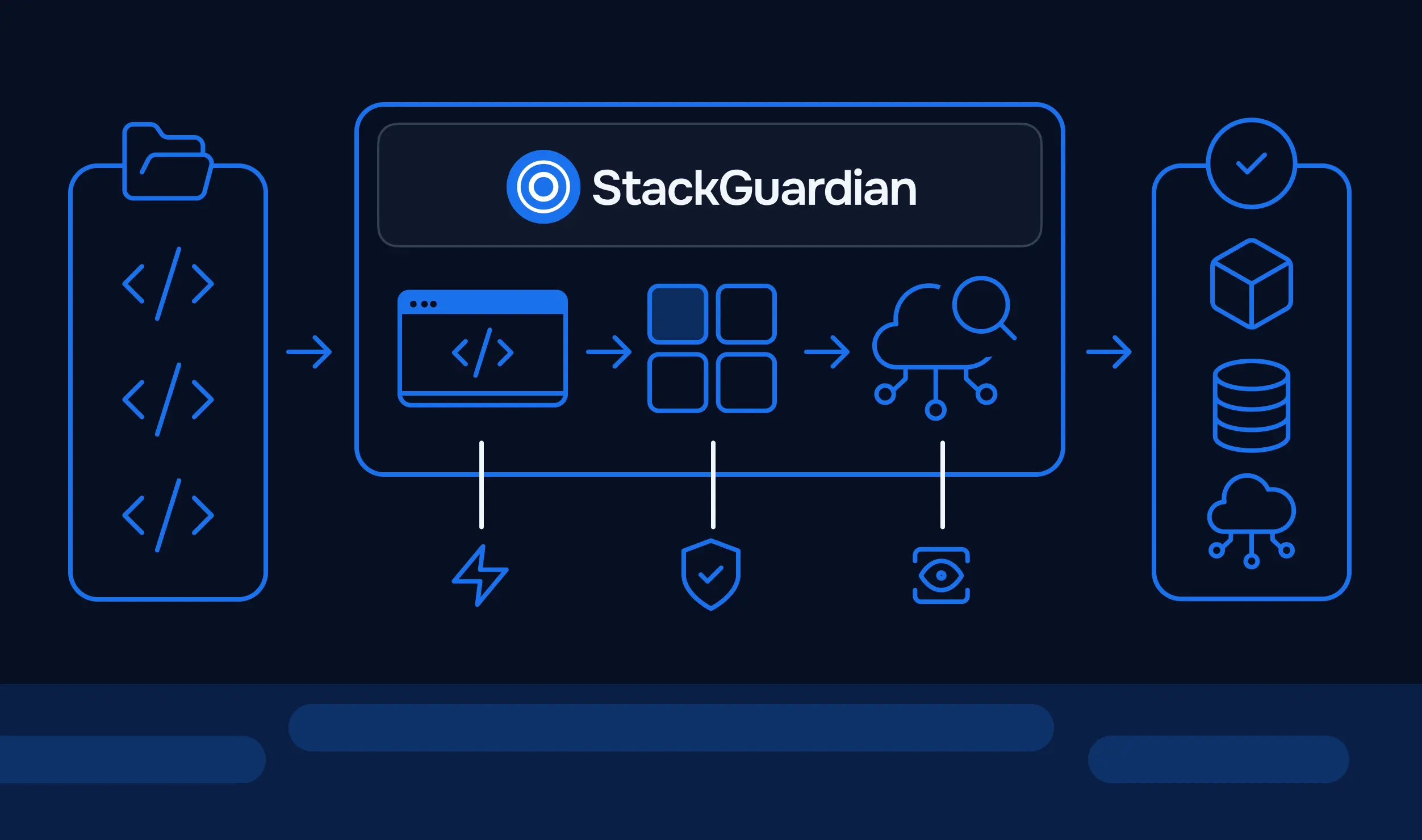
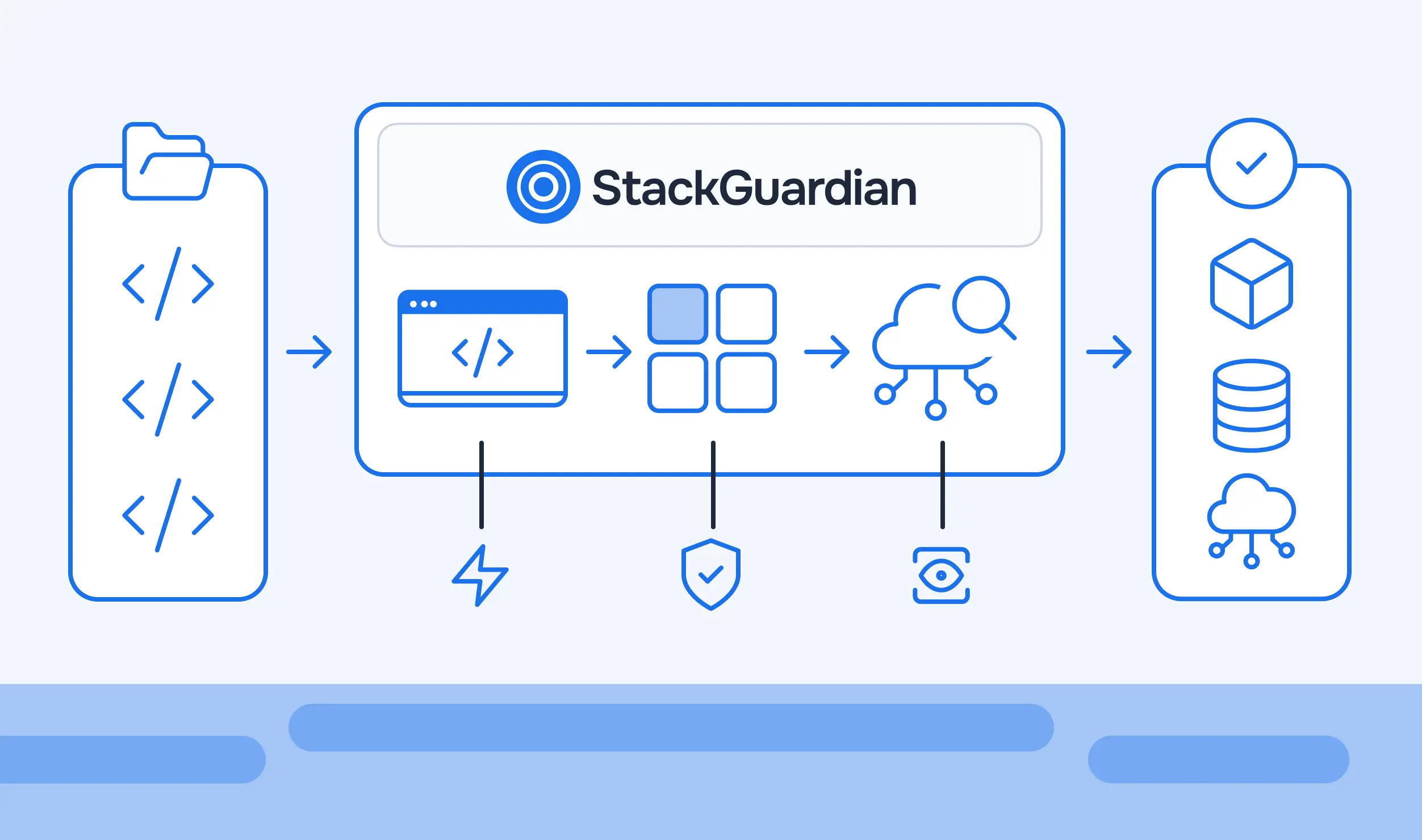
To achieve the best results, you need to rely on tools that offer the right functionalities. The StackGuardian platform can enable your team to implement golden paths across all three implementation phases.

The Discover module can help with assessing your current infrastructure state by performing 1800+ automated checks for infrastructure discovery and compliance checking to provide actionable insights into cost, security, and compliance best practices.
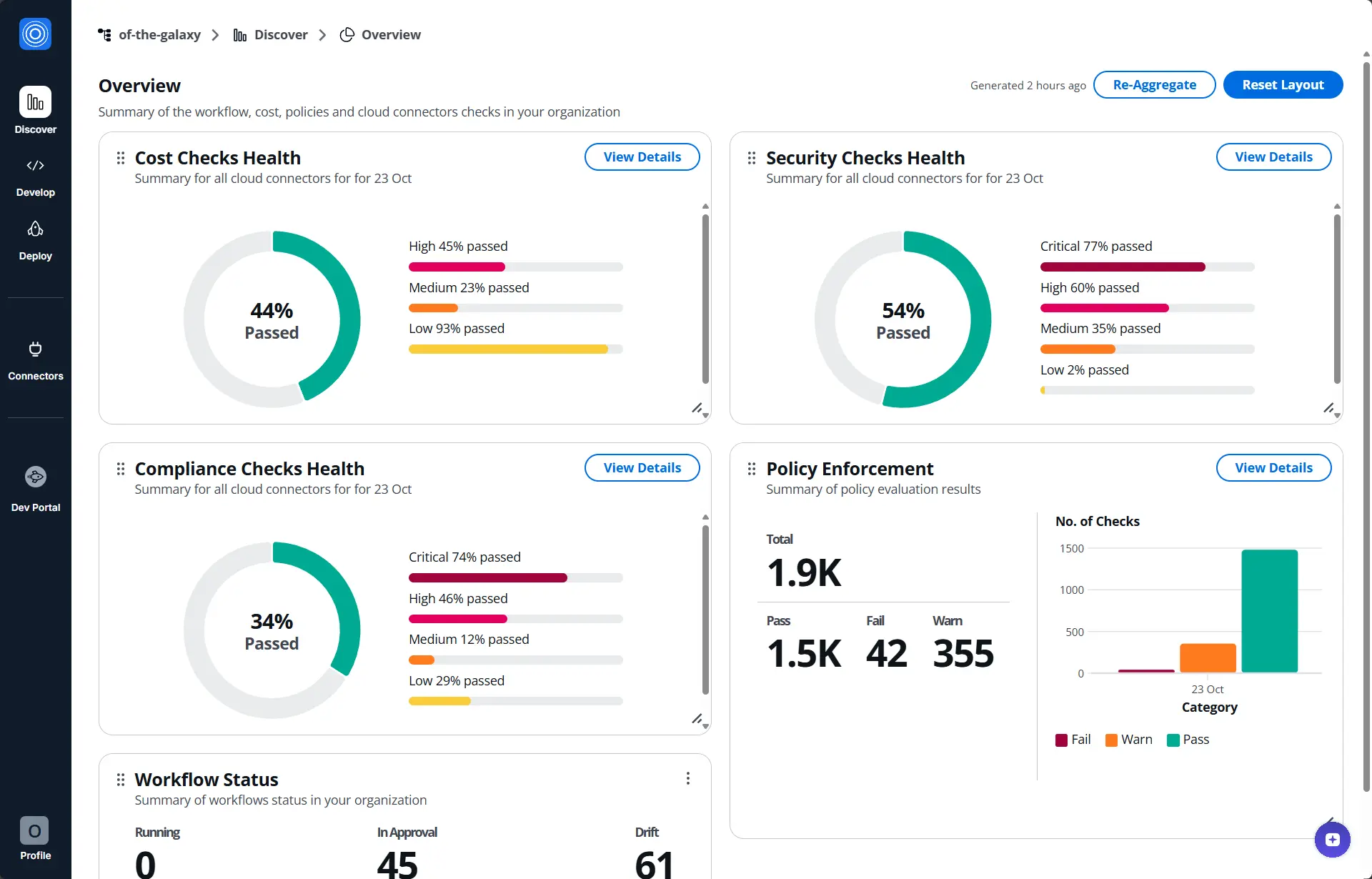
Dashboard Insights Overview

Next, the Develop module enables the creation of the necessary guardrails and IaC blueprints based on discovered insights, with no-code policy development capabilities. These include parameterized infrastructure templates, policy-as-code enforcement capabilities, and the SGMarketplace for pre-built infrastructure templates that you can quickly use.
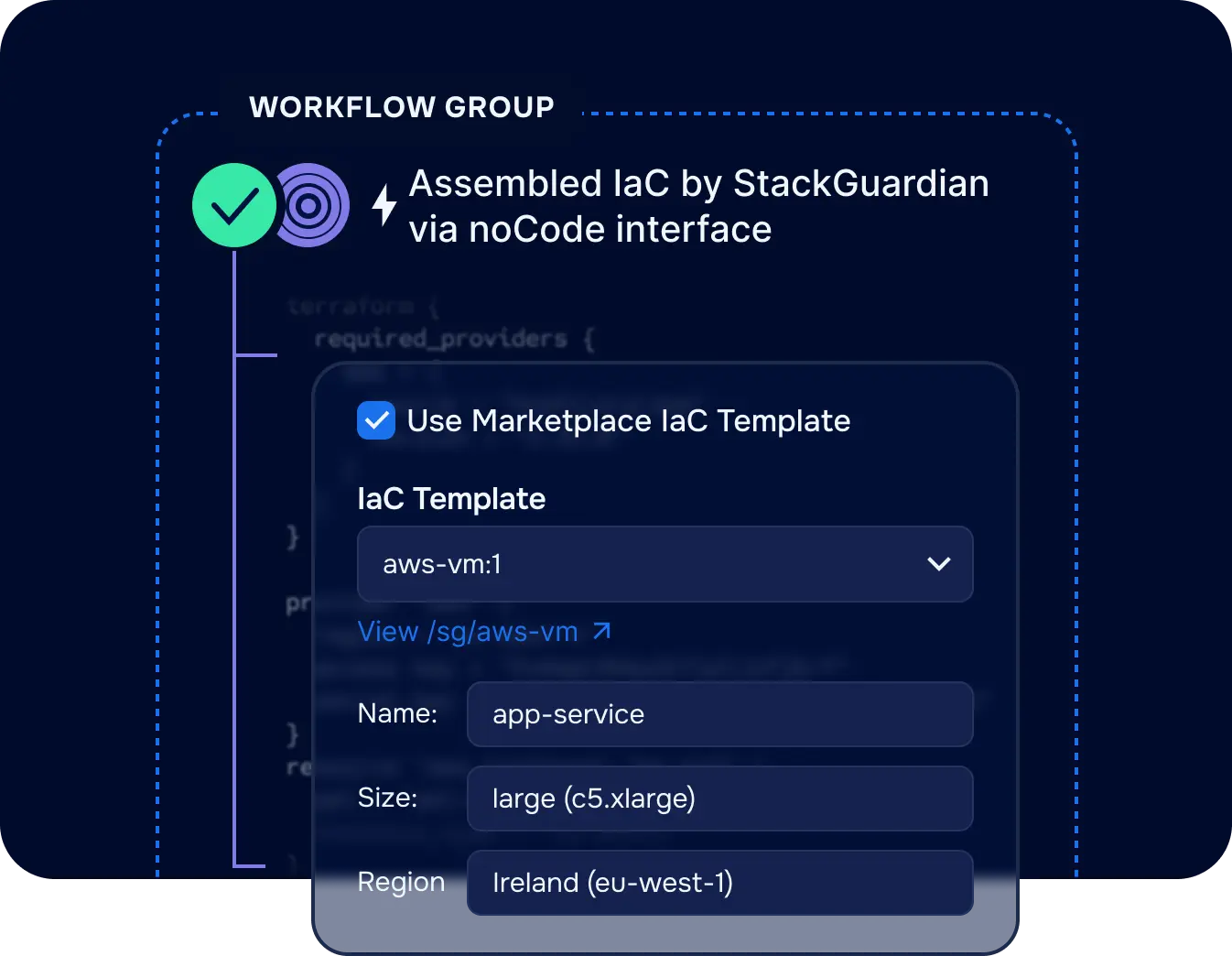
SG IaC Template

Lastly, the Deploy module enables self-service for developers and end-users through workflows with no-code interfaces. Deployment lifecycle management and continued compliance checks (such as Drift Detection) cover the “Day 2” operations side. It also offers integration capabilities with major cloud providers and CI/CD tools.
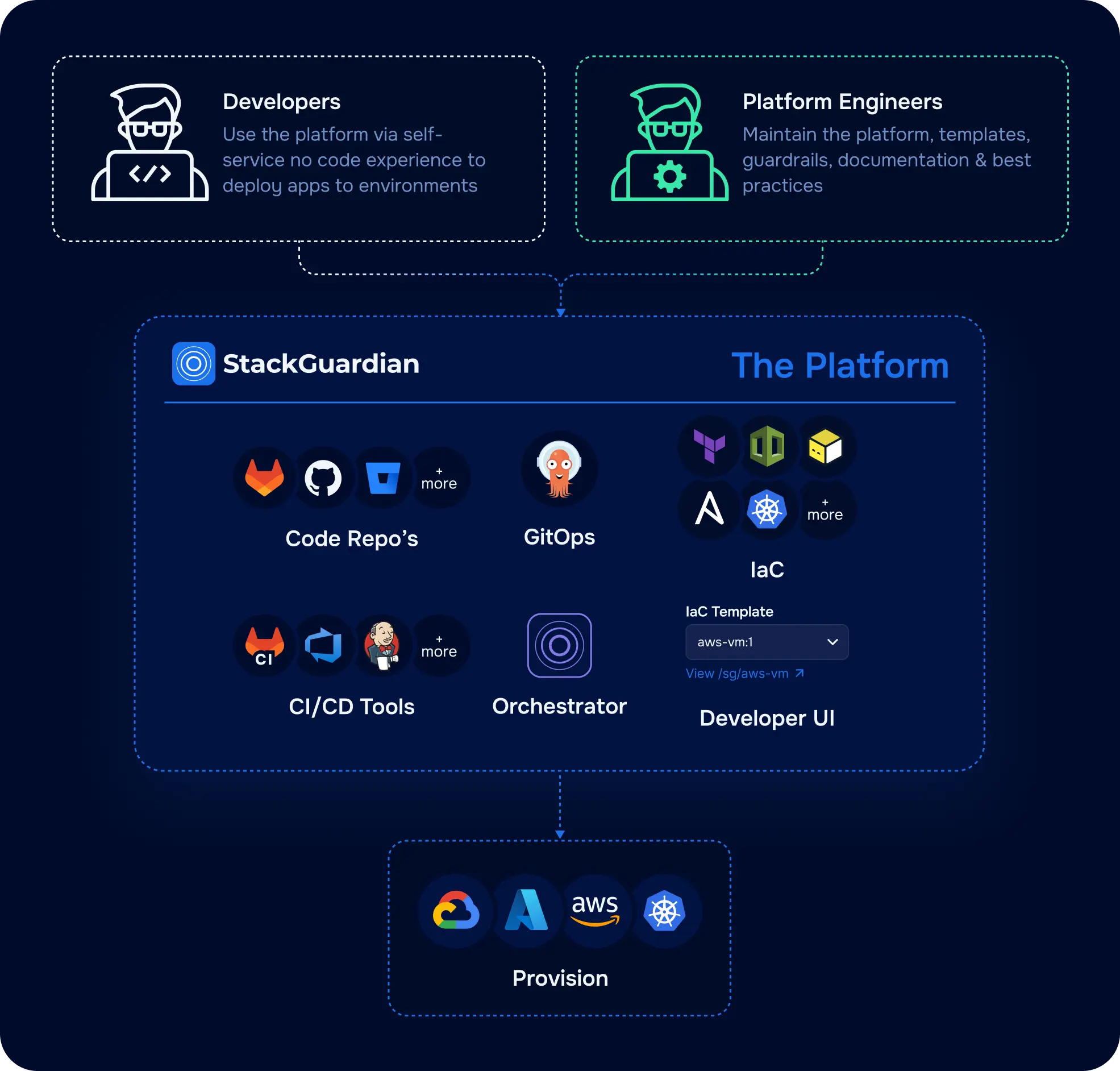
StackGuardian Modern Self-Service Platform Architecture

Ready to transform your infrastructure chaos into standardized golden paths? StackGuardian's integrated Discover-Develop-Deploy platform provides the foundation for implementing golden paths at scale. Book a demo today!
Share article
Blog

StackGuardian vs. HCP Terraform: Next-Gen Platform Engineering Alternative

HCP Terraform Cloud Alternative: How StackGuardian Delivers Next-Gen Infrastructure Orchestration

Press Release

StackGuardian Raises $10M to Accelerate Global Growth and Expand its Leading AI-Driven Infrastructure Automation & Orchestration Platform

Blog

Achieving DORA Compliance with Infrastructure as Code (IaC) and StackGuardian

A Financial Sector Perspective

Blog

StackGuardian vs. Backstage

Modern Platform Engineering: When to Build, When to Buy Your IDP — Beyond the Hype of Backstage.io

Blog

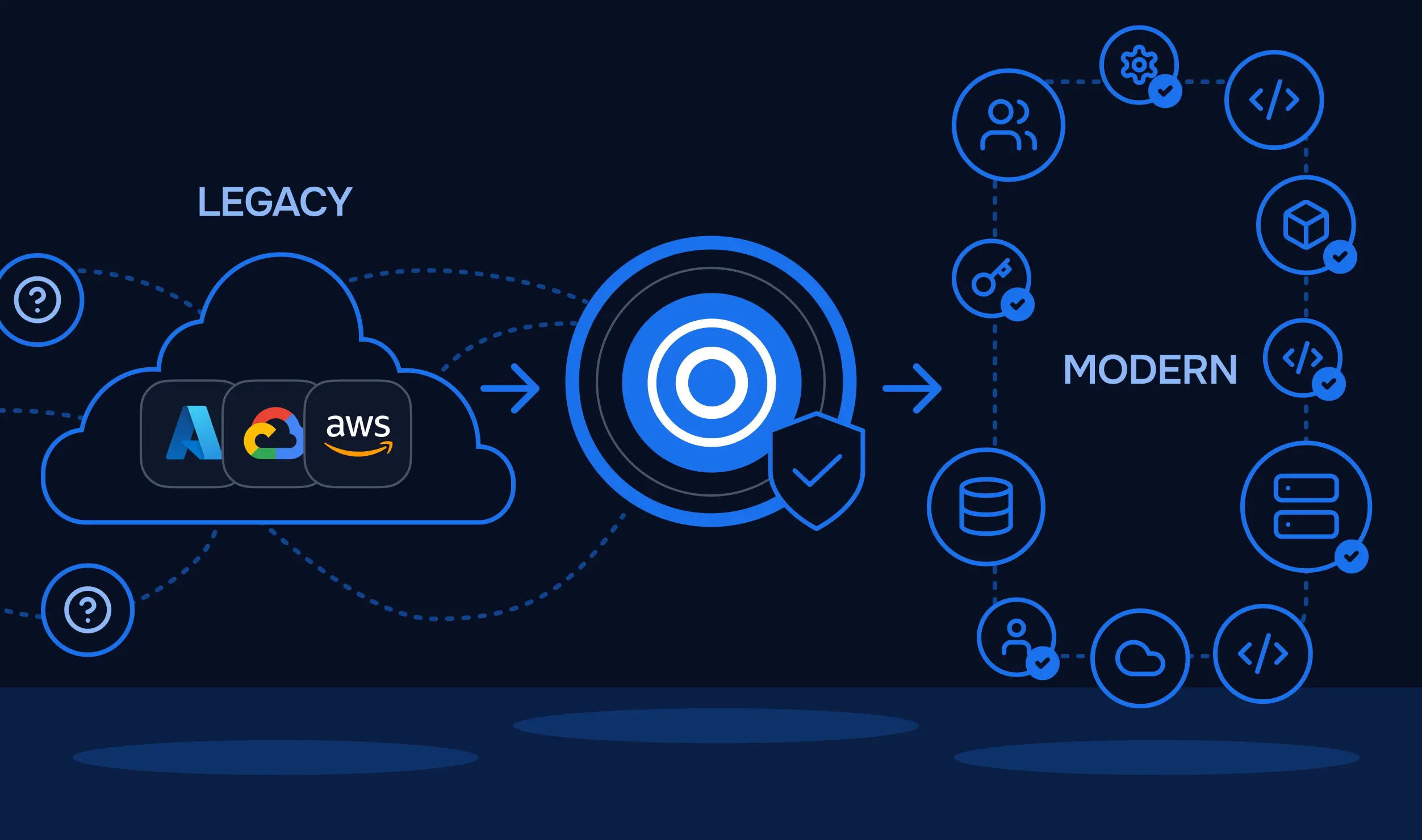
How AI can Impact Platform Engineering Implementations

Traditional approaches often fall short when organizations scale beyond simple deployments. Can artificial intelligence (AI) and agentic implementations bridge this gap?

Blog

Achieving GxP Compliance with Infrastructure as Code (IaC) and StackGuardian

In highly regulated industries, maintaining GxP (Good Practices) compliance is critical.

Blog

Terraform State Management at Scale: Strategies for Enterprise Environments

Terraform is one of the most popular tools for Infrastructure as Code (IaC). Let's understand Terraform State.

Blog

Implementing Cloud Security Best Practices with StackGuardian

Data breaches and misconfigurations can have serious consequences. Cloud security should be a top concern for every organization.

Blog

How Outcome-Driven Approaches Redefine DevOps and Platform Engineering Success

In the last decade, organizations chased the DevOps dream, drowning themselves in complexity and cognitive overload. Outcome-Driven Approaches Redefine DevOps and Platform Engineering Success

Blog

IaC: Best Practices & Implementation

Infrastructure as Code Best Practices & Implementation – transforming brittle, manual processes into repeatable blueprints for modern cloud operations.

Blog

Empower your Dev Teams: The Value of Self-Service Infrastructure

Imagine, a test environment closely matching production is automatically created for them. Developers don’t have to open a request and wait hours or days. This is the promise of self-service infrastructure!

Blog

Enhancing Developer Productivity with StackGuardian: A Game-Changer for Modern Teams

In today's fast-paced tech environment, developer productivity isn't just about writing code faster; it's about creating a workflow that allows developers to focus on innovation while maintaining efficiency, security, and compliance.

Blog

DevOps vs. Platform Engineering vs. Site Reliability Engineering (SRE)

Organisations today have a variety of approaches to managing software development and infrastructure operations. Three common models are DevOps, Platform Engineering, and Site Reliability Engineering (SRE). While there are some similarities, each has distinct goals, responsibilities, and practices.

Blog

StackGuardian and the DIE Framework: A Powerful Combination for Cybersecurity

The most common traditional security framework is the CIA triad, Confidentiality, Integrity, and Availability. The confidentiality, integrity, and availability of information is crucial to the operation of a business, and the CIA triad segments these three ideas into separate focal points. This differentiation is helpful because it helps guide security teams as they pinpoint the different ways in which they can address each concern.

Blog

What is YBIYRI?

You build it, you run it (YBIYRI) is growing in popularity. Here's everything you need to know

Blog

Building Golden Paths: Standardizing Cloud Deployments

Ioannis Moustakis
November 10, 2025
Industry
Use Cases
Company Size
SDK
~0 min read

In today’s fast-paced digital world, businesses rely on servers more than ever to store, process, and manage their data.

Lorem ipsum dolor sit amet, consectetur adipiscing elit. Aenean non commodo urna. Donec eu lobortis risus, vitae scelerisque nibh. Pellentesque eleifend convallis facilisis. Phasellus sed semper lorem, ac varius nisi. Proin pretium malesuada eros ac convallis. Nam condimentum, ex in posuere accumsan, justo felis tincidunt enim, quis ornare tortor sapien eu lectus.

Quisque suscipit euismod accumsan. In at ultricies nisi, ut varius ipsum.Nam lacinia at odio et viverra. Aliquam elit ex, volutpat sed ante et, semper dignissim risus. Morbi mi purus, vehicula sed elementum sit amet, placerat quis risus. Suspendisse est mi, fermentum a nunc et, sodales dictum tellus. Ut mattis porttitor risus, eget molestie sem ornare id. Quisque lobortis molestie vehicula. Nulla id suscipit arcu.Praesent laoreet euismod mauris, sit amet varius eros ullamcorper sed. Fusce congue eros non venenatis semper. Fusce finibus tortor ipsum, sit amet lacinia nunc ultrices vel. Suspendisse gravida aliquet felis sed accumsan. Morbi scelerisque turpis sed tellus blandit viverra.

Pellentesque nisi magna, volutpat vel tempor eu, consequat sit amet diam. Quisque sed lectus ut leo consectetur blandit. Donec efficitur risus sed orci mattis porttitor. In sodales justo et varius sodales. Suspendisse luctus, est vitae fermentum faucibus, tortor metus maximus massa, non posuere dui elit sit amet nunc. Praesent id vulputate sapien, ut lacinia lectus. Morbi diam dui, consequat non urna sed, cursus consequat nibh.Integer eget vehicula metus. Maecenas eu eleifend felis. Nulla auctor neque vitae orci congue cursus. Aenean at suscipit augue, nec faucibus nibh. Quisque convallis lacus at lacus tristique scelerisque in eu diam. Pellentesque egestas varius felis ut fermentum.

Praesent luctus, felis ut efficitur elementum, dolor leo vestibulum turpis, eu aliquam erat dui sed mi. Integer pellentesque, elit volutpat aliquam sagittis, erat mauris hendrerit augue, vitae gravida felis nisi eu nisi. Maecenas nisl urna, ultricies id arcu vitae, elementum auctor ante. Nam magna eros, interdum at scelerisque ut, viverra quis felis. Maecenas vitae ex quis mi venenatis tincidunt at et nisl. Nullam volutpat leo in semper bibendum. Aliquam pellentesque, diam in tempus pellentesque, ante nulla gravida diam, vel feugiat quam augue sollicitudin felis.Duis eu sagittis quam. Aliquam consectetur vehicula urna at tempus. Vivamus vel quam felis. Fusce eleifend non ipsum ac pharetra.

Duis suscipit feugiat venenatis. Cras ullamcorper quis velit a venenatis. Mauris ipsum lorem, dictum id posuere ac, consequat non tellus. Proin consectetur non ante id posuere. Donec viverra, leo in interdum eleifend, ligula augue facilisis magna, eu dictum urna risus mollis justo. Ut sit amet enim tortor. Integer sit amet lectus luctus orci vestibulum auctor lacinia quis erat. Donec nunc sapien, tempus nec porttitor a, luctus nec metus.

Share article
Blog

StackGuardian vs. HCP Terraform: Next-Gen Platform Engineering Alternative

HCP Terraform Cloud Alternative: How StackGuardian Delivers Next-Gen Infrastructure Orchestration

Blog

Building Golden Paths: Standardizing Cloud Deployments

Golden paths provide an easy, quick, safe, and replicable way to accomplish everyday tasks that align with organizational standards. Here's why you should use them

Press Release

StackGuardian Raises $10M to Accelerate Global Growth and Expand its Leading AI-Driven Infrastructure Automation & Orchestration Platform

Blog

Achieving DORA Compliance with Infrastructure as Code (IaC) and StackGuardian

A Financial Sector Perspective

Blog

StackGuardian vs. Backstage

Modern Platform Engineering: When to Build, When to Buy Your IDP — Beyond the Hype of Backstage.io

Blog

How AI can Impact Platform Engineering Implementations

Traditional approaches often fall short when organizations scale beyond simple deployments. Can artificial intelligence (AI) and agentic implementations bridge this gap?

Blog

Achieving GxP Compliance with Infrastructure as Code (IaC) and StackGuardian

In highly regulated industries, maintaining GxP (Good Practices) compliance is critical.

Blog

Terraform State Management at Scale: Strategies for Enterprise Environments

Terraform is one of the most popular tools for Infrastructure as Code (IaC). Let's understand Terraform State.

Blog

Implementing Cloud Security Best Practices with StackGuardian

Data breaches and misconfigurations can have serious consequences. Cloud security should be a top concern for every organization.

Blog

How Outcome-Driven Approaches Redefine DevOps and Platform Engineering Success

In the last decade, organizations chased the DevOps dream, drowning themselves in complexity and cognitive overload. Outcome-Driven Approaches Redefine DevOps and Platform Engineering Success

Blog

IaC: Best Practices & Implementation

Infrastructure as Code Best Practices & Implementation – transforming brittle, manual processes into repeatable blueprints for modern cloud operations.

Blog

Empower your Dev Teams: The Value of Self-Service Infrastructure

Imagine, a test environment closely matching production is automatically created for them. Developers don’t have to open a request and wait hours or days. This is the promise of self-service infrastructure!

Blog

Enhancing Developer Productivity with StackGuardian: A Game-Changer for Modern Teams

In today's fast-paced tech environment, developer productivity isn't just about writing code faster; it's about creating a workflow that allows developers to focus on innovation while maintaining efficiency, security, and compliance.

Blog

DevOps vs. Platform Engineering vs. Site Reliability Engineering (SRE)

Organisations today have a variety of approaches to managing software development and infrastructure operations. Three common models are DevOps, Platform Engineering, and Site Reliability Engineering (SRE). While there are some similarities, each has distinct goals, responsibilities, and practices.

Blog

StackGuardian and the DIE Framework: A Powerful Combination for Cybersecurity

The most common traditional security framework is the CIA triad, Confidentiality, Integrity, and Availability. The confidentiality, integrity, and availability of information is crucial to the operation of a business, and the CIA triad segments these three ideas into separate focal points. This differentiation is helpful because it helps guide security teams as they pinpoint the different ways in which they can address each concern.

Blog

What is YBIYRI?

You build it, you run it (YBIYRI) is growing in popularity. Here's everything you need to know