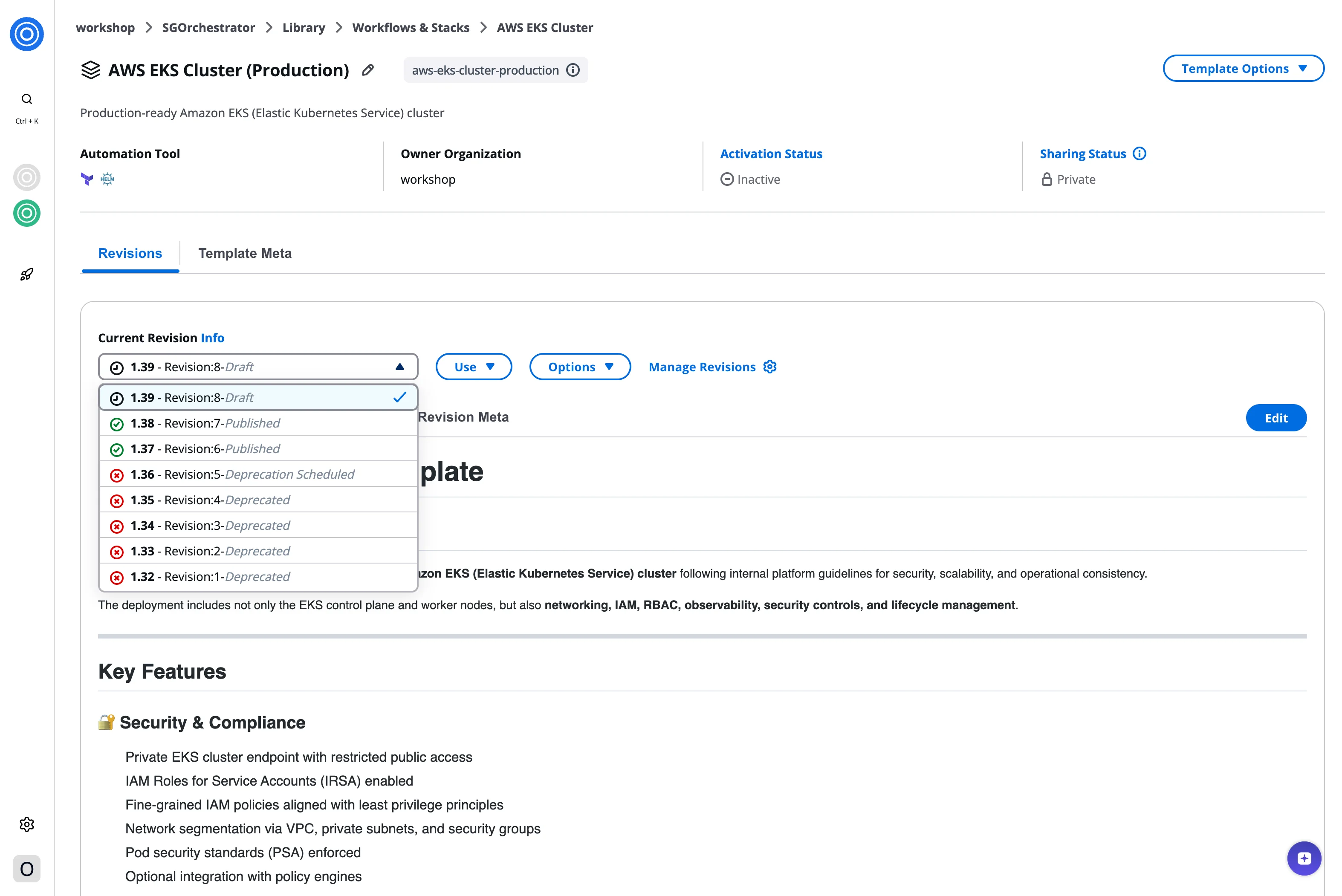
End-to-End IaC Lifecycle Management
Allow teams to automate infrastructure from provisioning to decommissioning while ensuring consistent governance and compliance across multi-cloud environments.
No credit card required · Production-ready in weeks
Common Challenges
Managing infrastructure from creation to retirement across complex environments leads to configuration drift, compliance gaps, and operational inefficiencies in dynamic, multi-region setups.
The StackGuardian Solution
Comprehensive lifecycle management with automated workflows and governance, unifying IaC tools like Terraform and OpenTofu through no-code blueprints and continuous policy enforcement.
Key Features
Infrastructure Provisioning Automation
Automate IaC deployments with pre-approved blueprints from SGMarketplace, integrating Terraform, Ansible, and more for rapid, standardized provisioning.
FinOps & Cost Visibility
Streamline updates and modifications through gated approvals and policy checks, preventing drift while supporting GitOps integrations.
Automated Decommissioning
Safely retire resources with automated cleanup workflows, reclaiming costs and ensuring no old modules remain.
Resource Tagging and Tracking
Enforce consistent tagging for FinOps visibility and compliance tracking across AWS, Azure, GCP, aligning with best practices.
Measurable Benefits
Accelerate Development Velocity
Enable teams to provision, update, and decommission infrastructure in minutes via self-service portals or CI/CD, reducing manual toil and boosting agility.
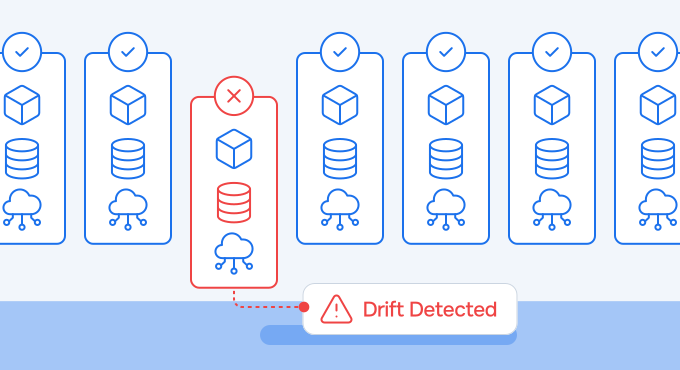
Eliminate Configuration Drift
Maintain golden paths with lifecycle automation and maintain your desired state ensuring compliance and auditability.
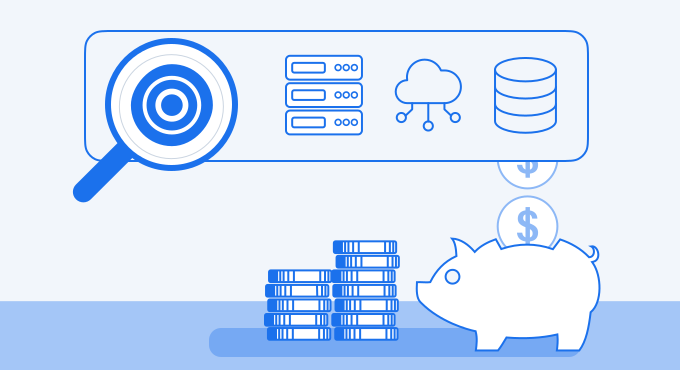
Drive Cost Optimization
Track resources end-to-end with tagging and FinOps insights, automatically identifying waste for efficient multi-cloud management.
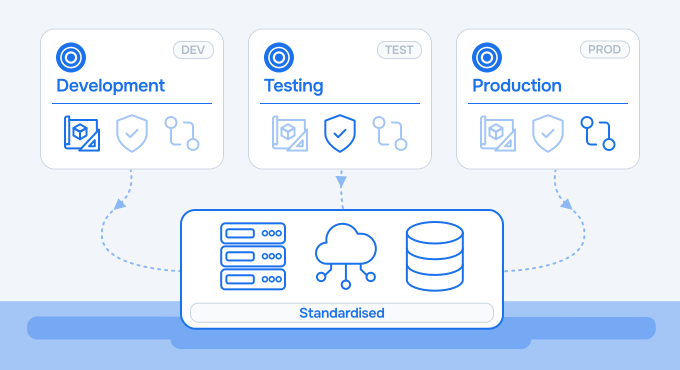
Standardise your infrastructure
Consistent infrastructure across environments ensures that every change flows through the same blueprints, policies, and workflows, reducing drift between dev, test, and production stages.
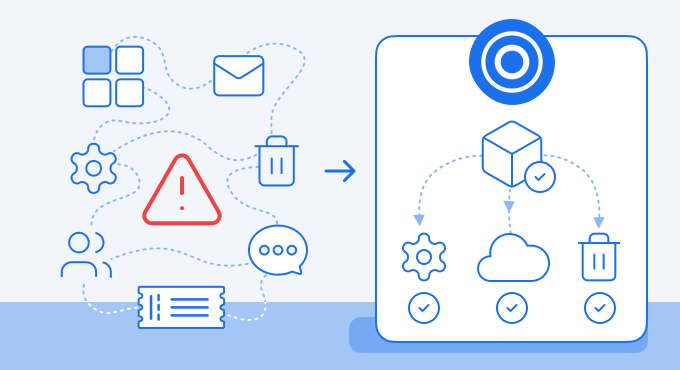
Reduce overhead
Automate provisioning, change management, and decommissioning to eliminate manual errors and ticket-driven workflows, freeing platform teams from fragile ad-hoc scripts.
FAQs on Lifecycle Management
What is IaC lifecycle management?
IaC lifecycle management is the process of handling infrastructure from provisioning through change management, tagging, and decommissioning using consistent workflows and governance. It helps teams keep cloud environments standardized, compliant, and easier to manage across the full resource lifecycle.
How does StackGuardian help automate infrastructure provisioning?
StackGuardian helps teams automate infrastructure provisioning with no-code blueprints and pre-approved IaC templates, so approved cloud resources can be deployed faster and more consistently. This reduces manual work and helps ensure every deployment follows the same governance rules.
Does StackGuardian support multi-cloud lifecycle governance?
Yes. StackGuardian supports consistent lifecycle governance across multi-cloud environments, including AWS, Azure, and GCP. It helps teams enforce tagging, compliance, and change control across regions and cloud providers from one platform.
Can StackGuardian support automated decommissioning?
Yes. StackGuardian supports automated and scheduled decommissioning so teams can retire infrastructure safely, clean up unused resources, and reduce waste. This helps lower costs while ensuring old resources, modules, and dependencies are removed in a controlled way.
Which Infrastructure as Code tools does StackGuardian support?
StackGuardian supports the most widely used Infrastructure as Code tools, including Terraform, OpenTofu, and Ansible. Via custom images we can also support tools like Cloudformation, Helm, ARM etc. It gives teams a single place to orchestrate approved infrastructure workflows without forcing them into one IaC authoring model.
Not sure where to start?
Our experts can help you identify the best use case for your organization's infrastructure challenges. Accelerate your platform engineering. Book a demo today.

Loved by Platform Engineers